Back to Tools
AI Tool Comparison
Writesonic vs Copy.ai
A detailed side-by-side comparison to help you choose the right AI tool for your needs.
Feature Comparison
Pros & Cons
Writesonic
Pros
- Combines content creation with AI search visibility tracking in one platform
- 80+ specialized writing tools covering articles, ads, landing pages, and product descriptions
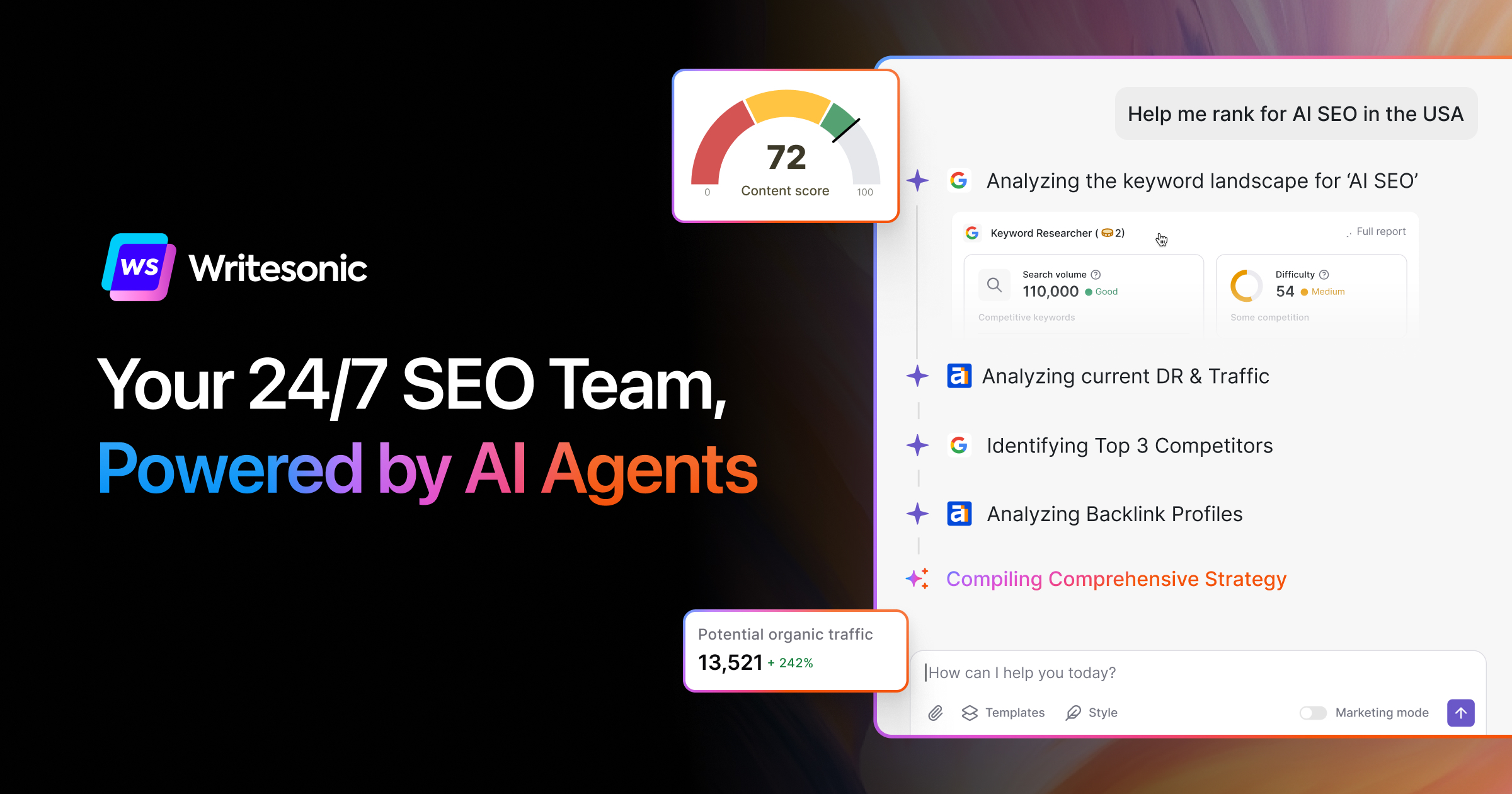
- Focuses on emerging GEO (Generative Engine Optimization) for AI search engines
- Includes competitor analysis and keyword data for data-driven content strategies
- Offers Surfer SEO integration for additional SEO optimization
Cons
- Pricing can escalate quickly for teams needing higher-tier features
- Platform has pivoted significantly from pure AI writing to SEO/GEO focus, which may confuse existing users
- Feature details and tier-specific limits are not clearly communicated on the pricing page
Copy.ai
Pros
- Consolidates multiple GTM use cases (prospecting, content, ABM, deal coaching) into one platform instead of requiring separate tools
- LLM-agnostic architecture supports OpenAI, Anthropic, Gemini, and Perplexity, avoiding vendor lock-in
- 2,000+ integrations including Salesforce, HubSpot, Gong, Zapier, Slack, and Microsoft OneDrive
- Infobase and Brand Voice features ensure consistent, on-brand content generation across teams
- Enterprise security with SOC 2, GDPR compliance, and SSO support
Cons
- Enterprise pricing is opaque — requires a demo and sales conversation, making it hard to evaluate cost upfront
- Free tier is very limited at 2,000 words per month, primarily useful for basic testing
- Platform complexity may be overkill for small teams or individual users who only need a simple writing assistant
- Heavy focus on enterprise GTM means non-GTM use cases (e.g., fiction writing, academic work) are not well served
Our Verdict
Both Writesonic and Copy.ai are excellent choices with similar feature sets. Your decision should depend on your specific needs, pricing, and whether you need self-hosting capabilities.