Deploy functions and applications without managing servers.
5 Tools Reviewed
Expert Curated
Regularly Updated
#1 Best Overall
Clarifai
The fastest AI inference and reasoning on GPUs at scale
Freemium
Free Tier
Clarifai is a full-stack AI platform that provides fast GPU-accelerated inference for over 1 million AI models including large language models, computer vision, and multimodal models. It targets developers and ML engineers who need to deploy, scale, and manage AI models across cloud, on-premise, and edge environments with OpenAI-compatible APIs and per-usage compute billing.
Pros
OpenAI-compatible API means minimal code changes to switch from OpenAI
Massive model catalog with 1M+ models including latest open-source and proprietary LLMs
Flexible GPU options across AWS, GCP, and Clarifai's own cloud with per-minute billing
Cons
Usage-based pricing can be difficult to predict for budgeting, especially at scale
Steep learning curve for teams without ML infrastructure experience
Pricing page is complex with many GPU tiers and cloud providers, making comparison difficult
Best for:ML engineers and dev teams needing scalable GPU inference for production AI workloads
Build, deploy, and scale web apps and AI applications on the AI Cloud
Free / $20/mo
Free Tier
Vercel is a cloud platform for building, deploying, and scaling web applications and AI-powered projects. It provides git-based continuous deployment, a global edge network, serverless functions, an AI gateway for accessing hundreds of models, and deep framework support for Next.js, Nuxt, Svelte, and more. The platform is designed for frontend developers and full-stack teams who want to ship fast without managing infrastructure.
Pros
Automatic deployments from git with instant preview URLs for every pull request
Global edge network delivers content fast worldwide with zero-config CDN
Deep Next.js integration with framework-aware infrastructure provisioning
Cons
Usage-based pricing can lead to unpredictable costs at scale with many overage charges
Heavily optimized for Next.js — other frameworks get less first-class treatment
Vendor lock-in risk with platform-specific features like Fluid Compute and Edge Config
Best for:Frontend and full-stack teams deploying web apps with global performance needs
The all-in-one cloud provider for deploying and scaling applications
Free / $5/mo
Free Tier
Railway is a cloud platform that handles deployment, networking, scaling, and monitoring for web applications and backend services. It auto-detects project configuration from code repositories or Docker images, provisions databases, and provides built-in private networking, SSL, and load balancing. It is aimed at developers and teams who want to avoid the complexity of traditional cloud infrastructure while retaining full control over their stack.
Pros
Auto-configuration detects your code and sets correct build/deploy settings automatically
Visual canvas provides instant visibility into your entire infrastructure at a glance
Hard spending limits prevent unexpected bills — rare among cloud providers
Cons
Only 4 deployment regions currently (US East, US West, Europe West, Southeast Asia)
Volume storage capped at 5 TB per volume, which may not suit large data workloads
Limited to 50 replicas per service for horizontal scaling, potentially insufficient for very high-traffic enterprise apps
Best for:Development teams wanting fast, infrastructure-free deployment and scaling
Build and deploy APIs, bots, and integrations instantly
Freemium
Free Tier
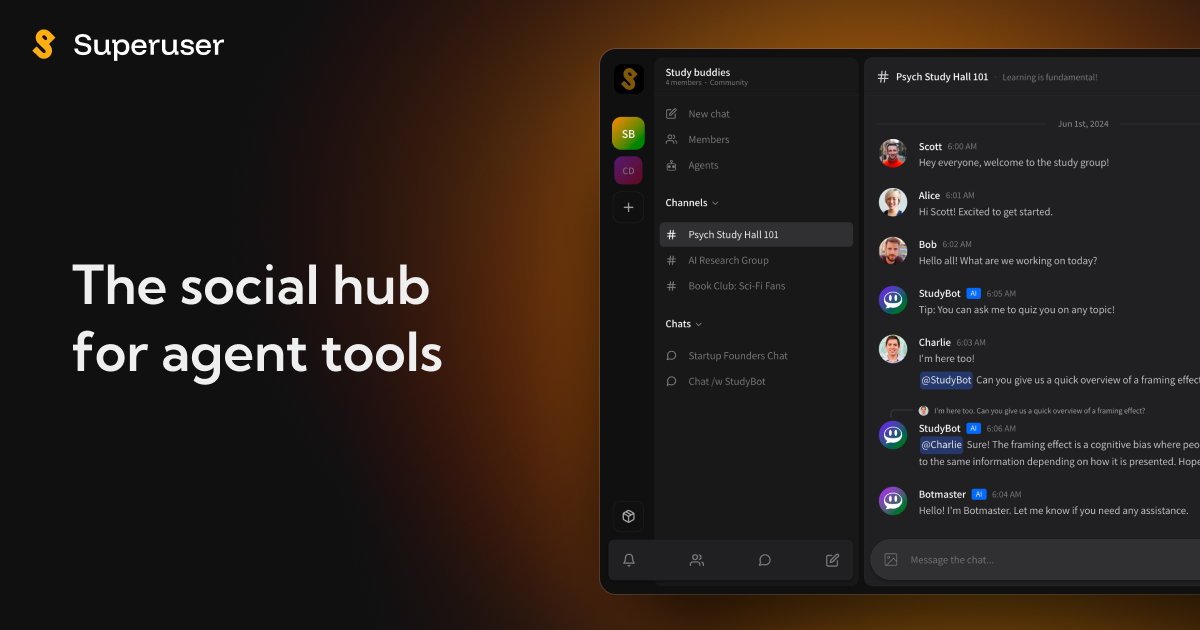
Autocode, now rebranded as Superuser, was a serverless platform for building and deploying APIs, bots, and backend integrations directly from a browser-based editor. It was especially popular for quickly creating Discord bots, Slack apps, and webhook-based automations using Node.js. The platform appealed to both developers seeking rapid prototyping and less technical users wanting to automate workflows without managing servers.
Pros
Instant deployment of serverless endpoints without infrastructure management
Built-in Standard Library with pre-configured connectors for popular APIs like Slack, Discord, and Airtable
Browser-based code editor eliminates local setup requirements
Cons
Has been rebranded to Superuser, so the original Autocode platform and documentation may be in transition or deprecated
Limited to Node.js runtime, restricting language choice for developers
Vendor lock-in risk as code relies on proprietary Standard Library abstractions
Best for:Developers building quick API integrations, bots, and serverless endpoints
The cloud platform for builders to deploy and scale apps effortlessly
Free / $6/mo
Free Tier
Render is a cloud platform for deploying and hosting web applications, APIs, databases, background workers, and cron jobs. It offers managed PostgreSQL and Redis, autoscaling, infrastructure-as-code via Blueprints, and a CLI/SDK ecosystem. Aimed at developers and teams looking for a simpler alternative to AWS or a more capable successor to Heroku.
Pros
Free tier available for web services, PostgreSQL (30 days), and Redis to get started quickly
Autoscaling up to 100 instances with CPU/memory-based triggers reduces manual ops work
Infrastructure-as-code with Blueprints allows reproducible deployments from YAML files
Cons
Free web services spin down after 15 minutes of inactivity, causing cold start delays
Free PostgreSQL databases have a 30-day limit, requiring upgrade for ongoing use
Autoscaling requires a Professional workspace or higher — not available on basic plans
Best for:Developers and teams who want managed hosting without infrastructure complexity